
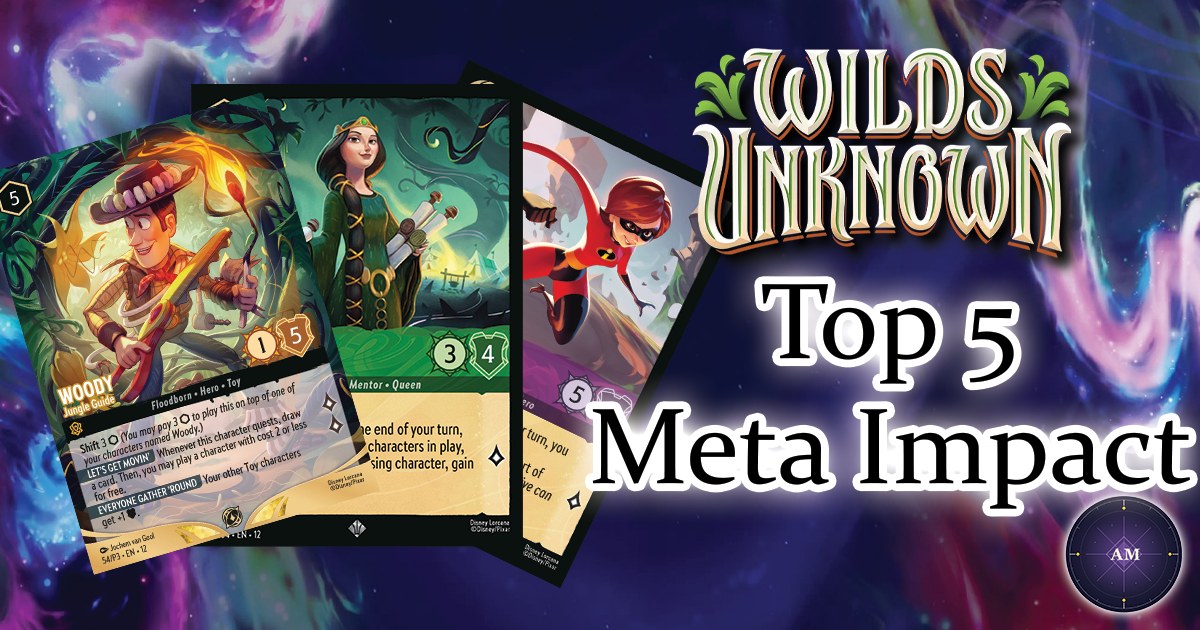
Lorcana Wilds Unknown: The 5 Most Impactful Cards
A personal look back at the five Wilds Unknown (Set 12) cards that shaped Disney Lorcana most across Core and Infinity, plus which ones survive the rotation. Every finish is linked to its tournament decklist.

Wilds Unknown handed Disney Lorcana one of its shortest competitive seasons, and it made every week count. These are the five cards that shaped it the most, ranked by the mark they left on both Core and Infinity.
This was Pixar’s debut in Lorcana, with Toy Story and the Incredibles crashing the party, and the meta it created moved fast. A card could be spicy tech one week and the deck to beat a month later. With the set’s run winding down, here is my personal ranking of the cards that mattered most, plus a look at which ones survive the coming rotation.
One note before we start: this is my read, not gospel. Metagames are living things, and the cards below earned their spots by what actually won and what everyone was forced to play around. Every finish I cite links to the decklist behind it.
5. Mrs. Incredible — Super Stretchy
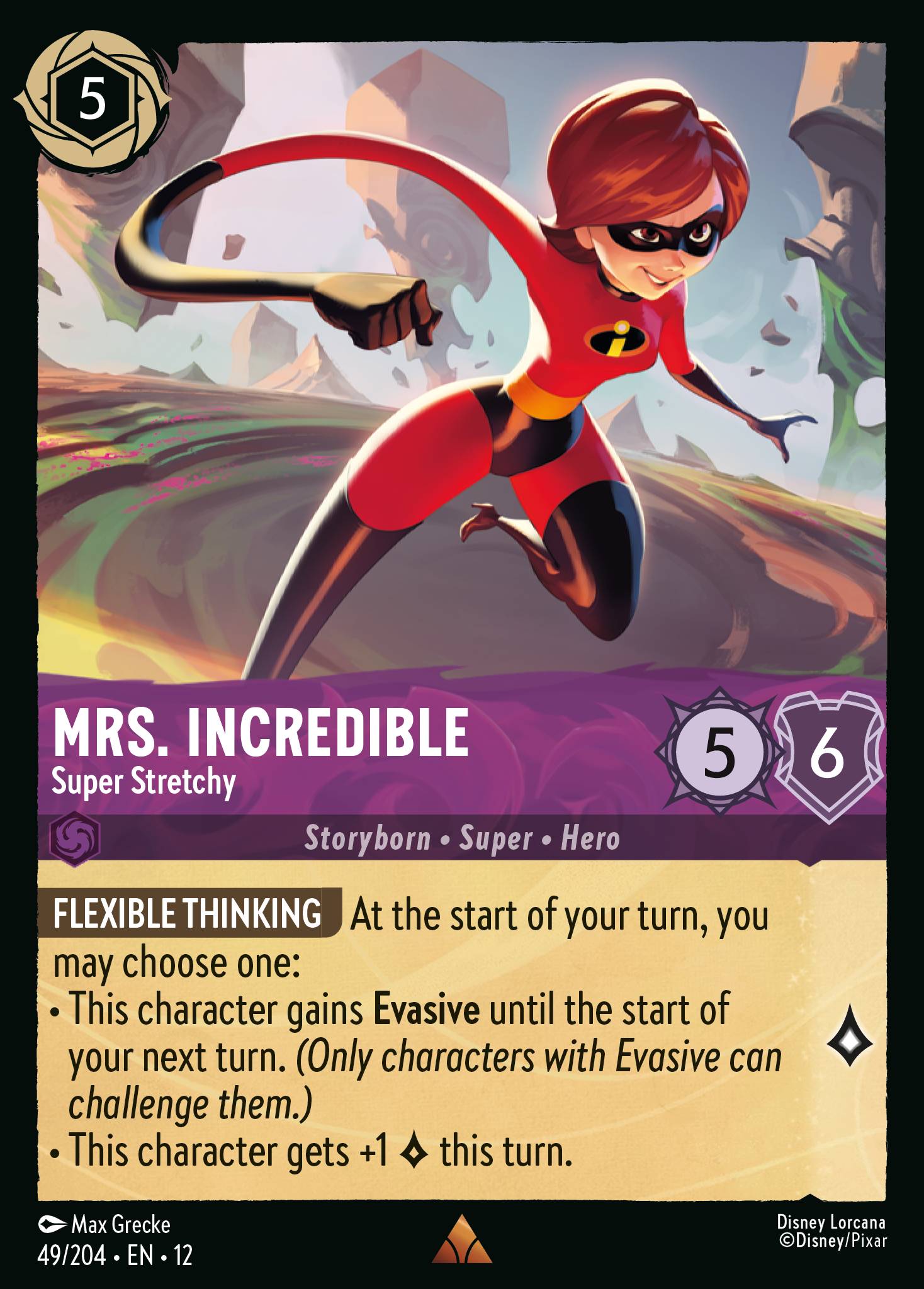
Pixar’s first family showed up swinging, and Mrs. Incredible — Super Stretchy turned out to be one of the most-played cards in the whole set. She asks a simple question every turn: do you need to get through, or do you need to survive? Her ability lets you choose Evasive to sail over blockers, or an extra point of lore to close the game out. Against aggro she’s a wall; against control she’s a clock. That “always useful” flexibility made her a four-of in the Amethyst and Sapphire evasive decks that stacked the top tables, including the Blurple lists that finished first and second at the Conflux Ink Clash. She rarely stole the headline, but she was quietly everywhere.
4. Merryweather — Feisty Fairy
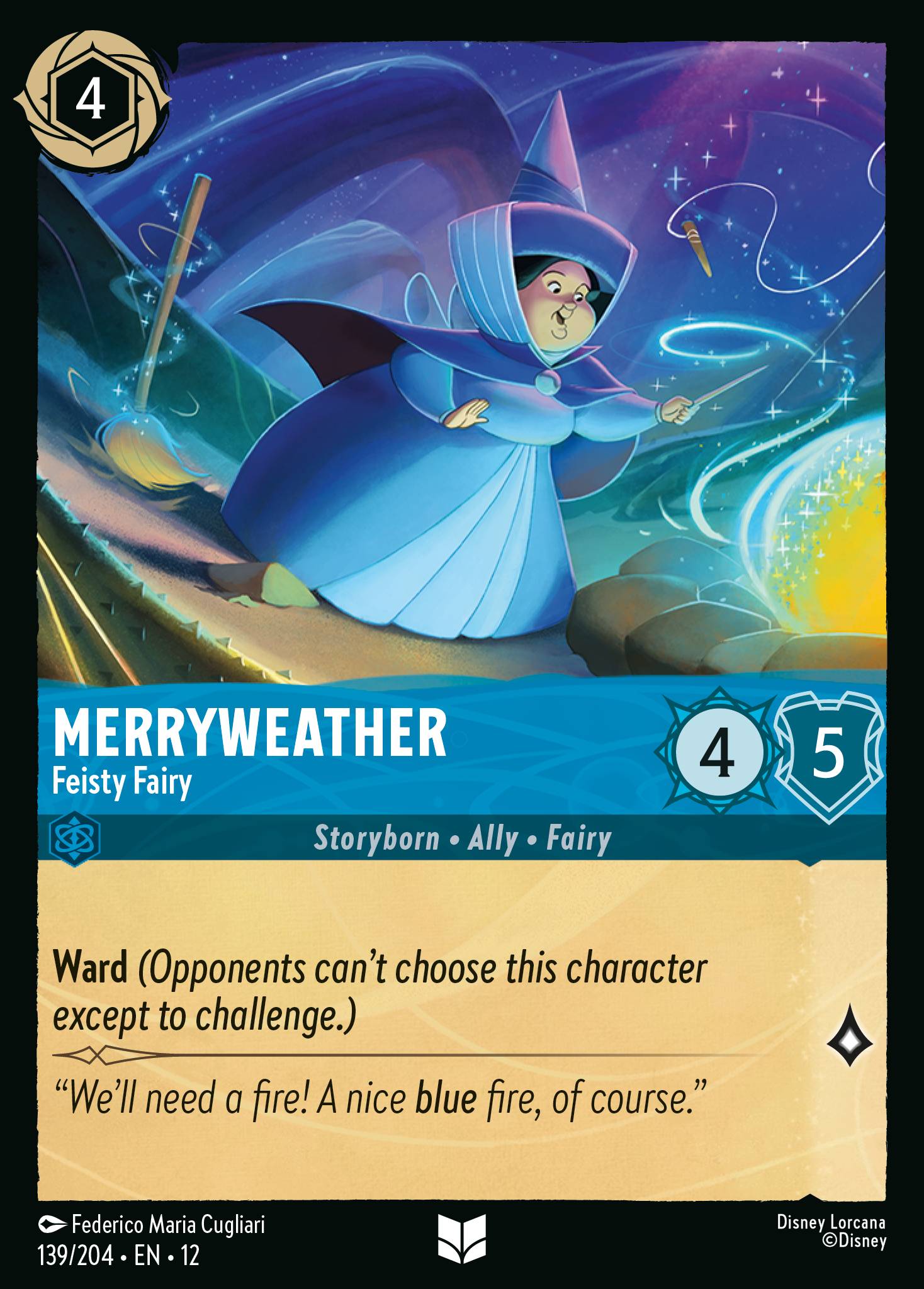
If you played competitive Wilds Unknown, you played against Merryweather — Feisty Fairy a lot. She was the most-played card in the format, the sturdy Ward body that anchored the whole evasive and control side of the meta. Ward means your opponent can’t target her with removal or tricky effects, only challenge her, so she plants herself in the middle of the board and dares you to deal with her the hard way. Whether you were staring down a wall of Blurple evasive threats or a Sapphire and Steel song deck, Merryweather was usually part of the problem. She didn’t win games on her own, but every deck in the format had to have a plan for her.
3. Mickey Mouse — Expedition Leader

Here’s the quiet engine that powered the best aggressive deck in Core. Mickey Mouse — Expedition Leader doesn’t look flashy, but his ability is brutal in a deck full of characters: while he’s exerted, every time another one of your characters quests, an opposing character shrinks by two strength. Play a wide board, start questing, and suddenly the other side has no good blocks left. He was a three-of in the Amber and Emerald “Dogs” aggro deck that Ace103 piloted to victory at the Core Constructed Qualifier at the UK Games Expo in Birmingham, one of the archetype’s many premier wins that season. He’s the reason a board full of small creatures could bulldoze through much bigger ones.
2. Dale — Ready for His Shot
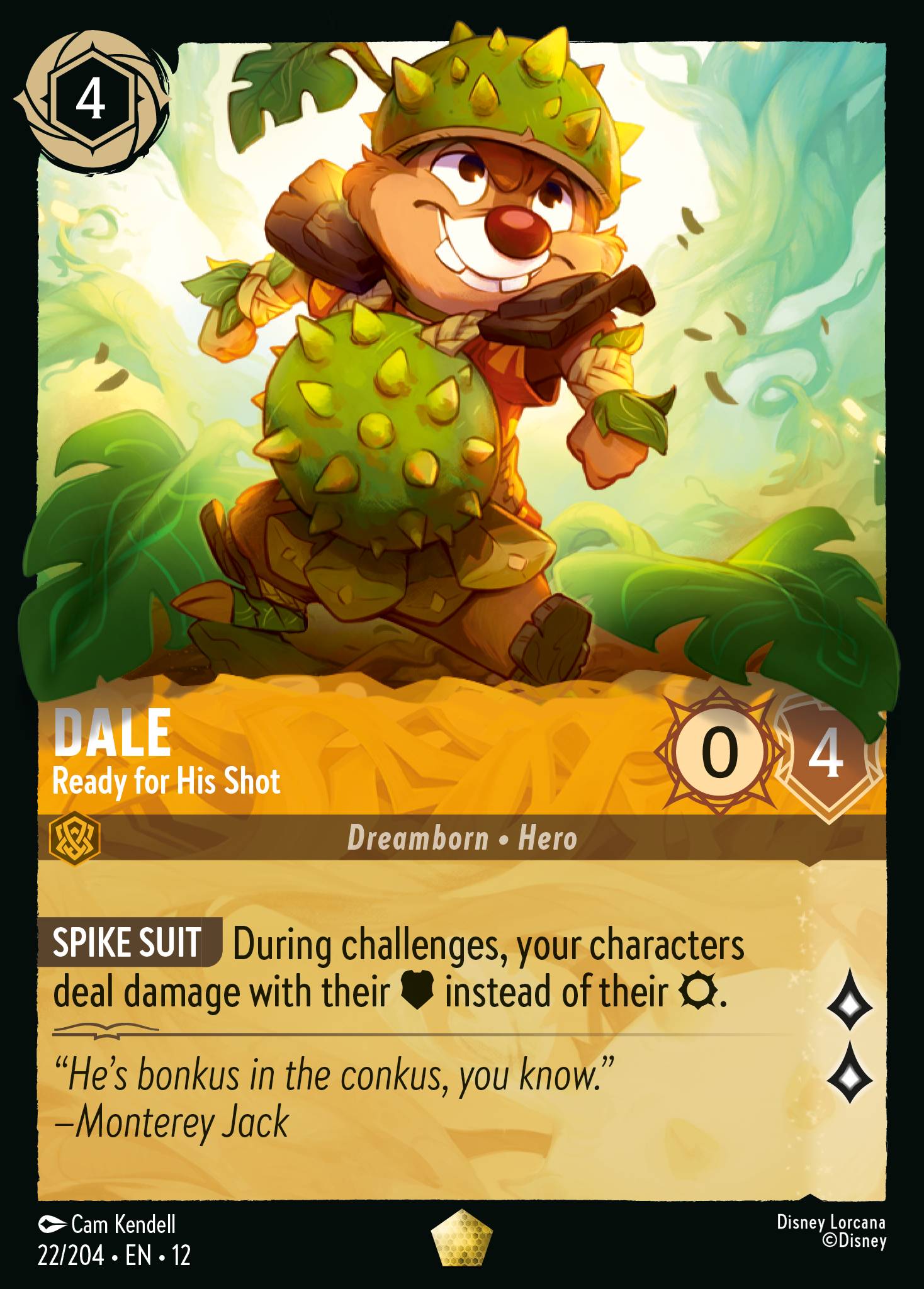
Every set brings a new mechanic, and Wilds Unknown’s most build-defining one showed up right on Dale — Ready for His Shot. Normally characters deal damage in combat with their Strength. Spike Suit flips that to Willpower, which rewires how you read your entire board. All of a sudden your durable, high-Willpower blockers hit like trucks. Dale was the rare card that showed up across completely different decks in both Core and Infinity, from Luke Smythe’s Top 8 evasive build at the Birmingham CCQ to bargain-bin Amber and Ruby brews to a Steelsong song deck that splashed him on the way to Top 4 at the Oakville Infinity qualifier. “Change the rules of combat” is a tool almost any deck can find a use for. The result was less a single archetype than a new way of reading the board: with Dale in play, every stout blocker you own is suddenly a live threat.
1. Elinor — Renowned Diplomat
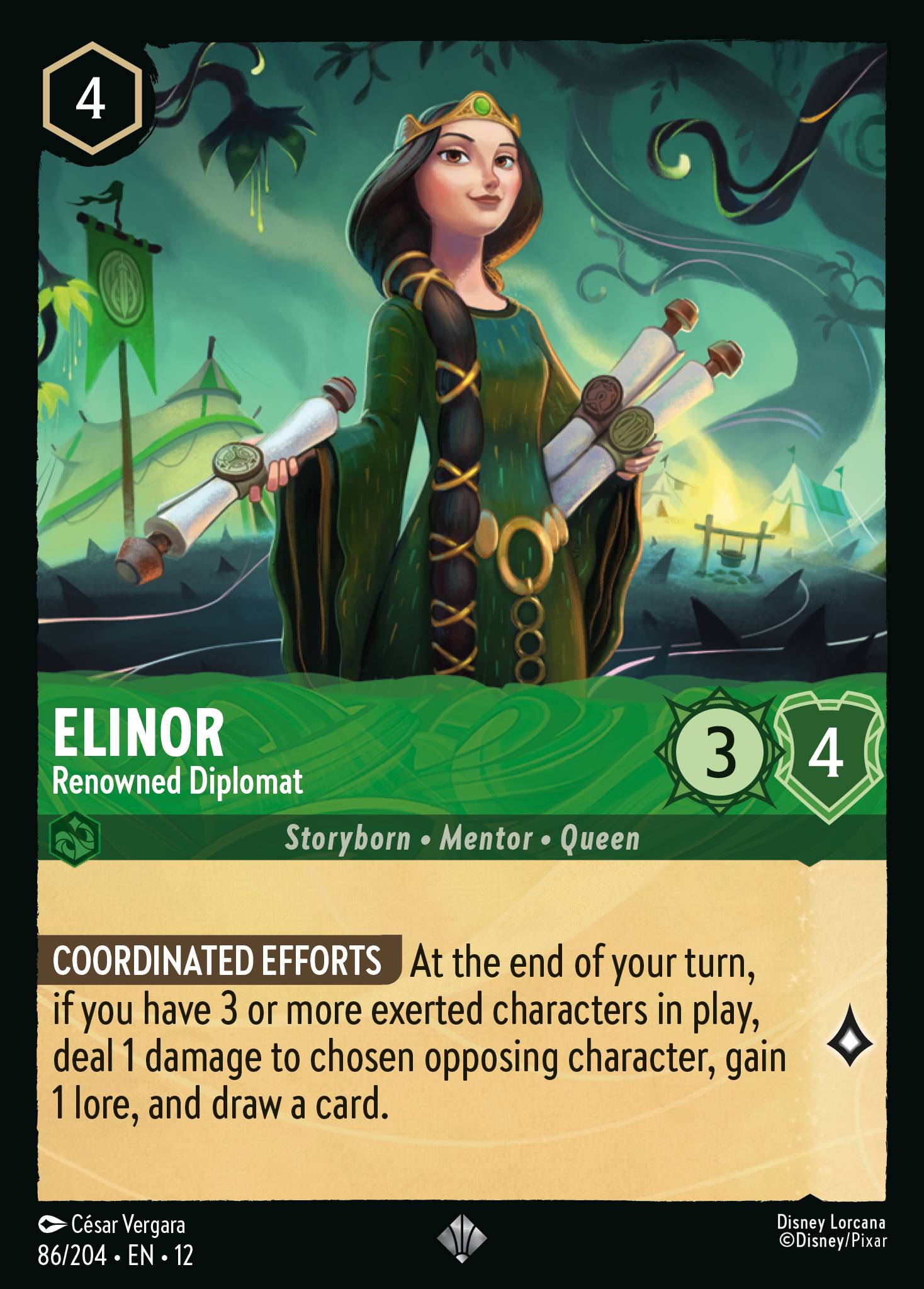
And the card that defined the season. Elinor — Renowned Diplomat is the payoff at the heart of Amber and Emerald, the color pair that became the deck to beat on three continents. Her ability rewards you for doing exactly what a good board wants to do anyway. If you have three or more exerted characters at the end of your turn, you deal a damage, gain a lore, and draw a card, for free, every single turn. In a go-wide deck that is a snowball that never stops.
What makes Elinor the real story of Wilds Unknown, though, is her arc. Early on she was a niche pick that a handful of players were quietly winning with. Within about a month everyone had caught on. She won the 700-plus player Fukuoka Summer Grand Prix in Japan, she put three copies into the Top 8 of the 1,700-player Disney Lorcana Challenge in Indianapolis, and by the Dortmund Challenge five of the Top 8 decks were flying her Amber and Emerald colors. She spread so fast that one of the top finishers in Dortmund named his list “I was playing Elinor 4 weeks ago,” half flex and half told-you-so. Watching a card go from spicy tech to format-definer in real time is the best kind of Lorcana, and Elinor did it faster than anything else in the set.
The rotation question: who survives?
Wilds Unknown is on the clock. When the next set lands, the oldest sets rotate out of Core, and a big chunk of what made these decks tick leaves with them. So which of these cards are era-definers, and which are just having a moment?
My bet is that Elinor — Renowned Diplomat and Mickey Mouse — Expedition Leader are the keepers. The “go wide and grind value” plan they enable doesn’t lean on anything that’s rotating away, and every future set that prints another cheap character just hands them more fuel. Cards like that tend to get better with age, not worse.
Dale — Ready for His Shot sticks around too, but as a wildcard. Spike Suit will always have a home somewhere. Whether it’s a top-tier deck or a fun brew depends entirely on what future sets give it to work with.
The surprise on my list is the card most likely to fade: Merryweather — Feisty Fairy. She’s the most-played card in the set today, but the decks she calls home lean hard on support that’s about to rotate out. She’s a perfectly good card on her own, but without her engine she probably slides from everywhere to somewhere.
And keep an eye on the sleepers. Some of the set’s quieter cards, the ones built to fill up your discard or grind out extra cards, could jump from fringe to staple the moment the right support arrives. That’s the fun of a rotation. Losing old cards is only half of it; the other half is watching which survivors suddenly matter more.
A few more that earned a nod:
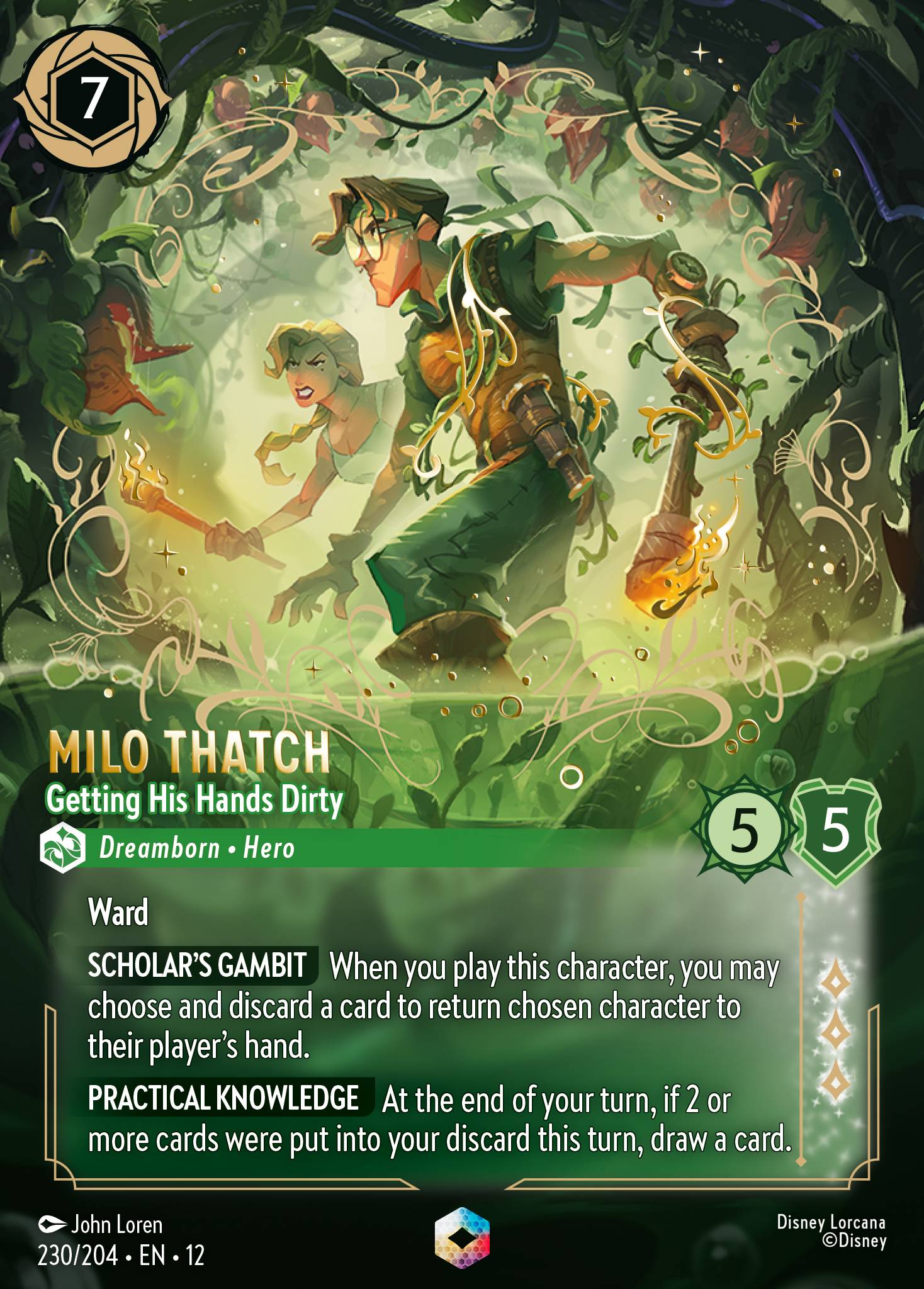
- Milo Thatch — Getting His Hands Dirty was the payoff at the top of Emerald and Sapphire control, the finisher that let the grindiest decks in the format bury opponents in card advantage.
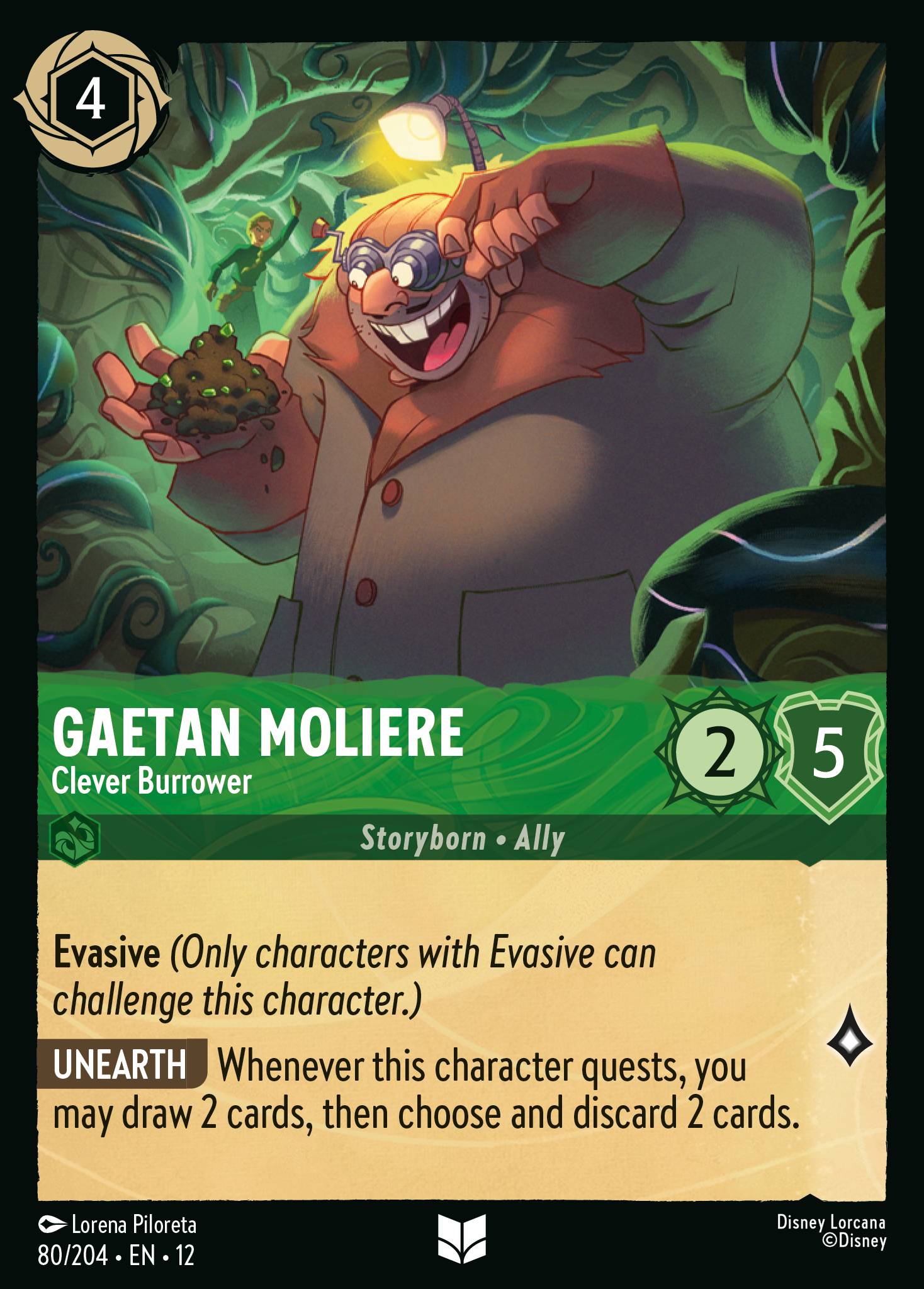
- Gaetan Moliere — Clever Burrower flew under the radar all season, but a cheap evasive body that digs through your deck is exactly the kind of engine that wakes up the moment the right payoffs show up.
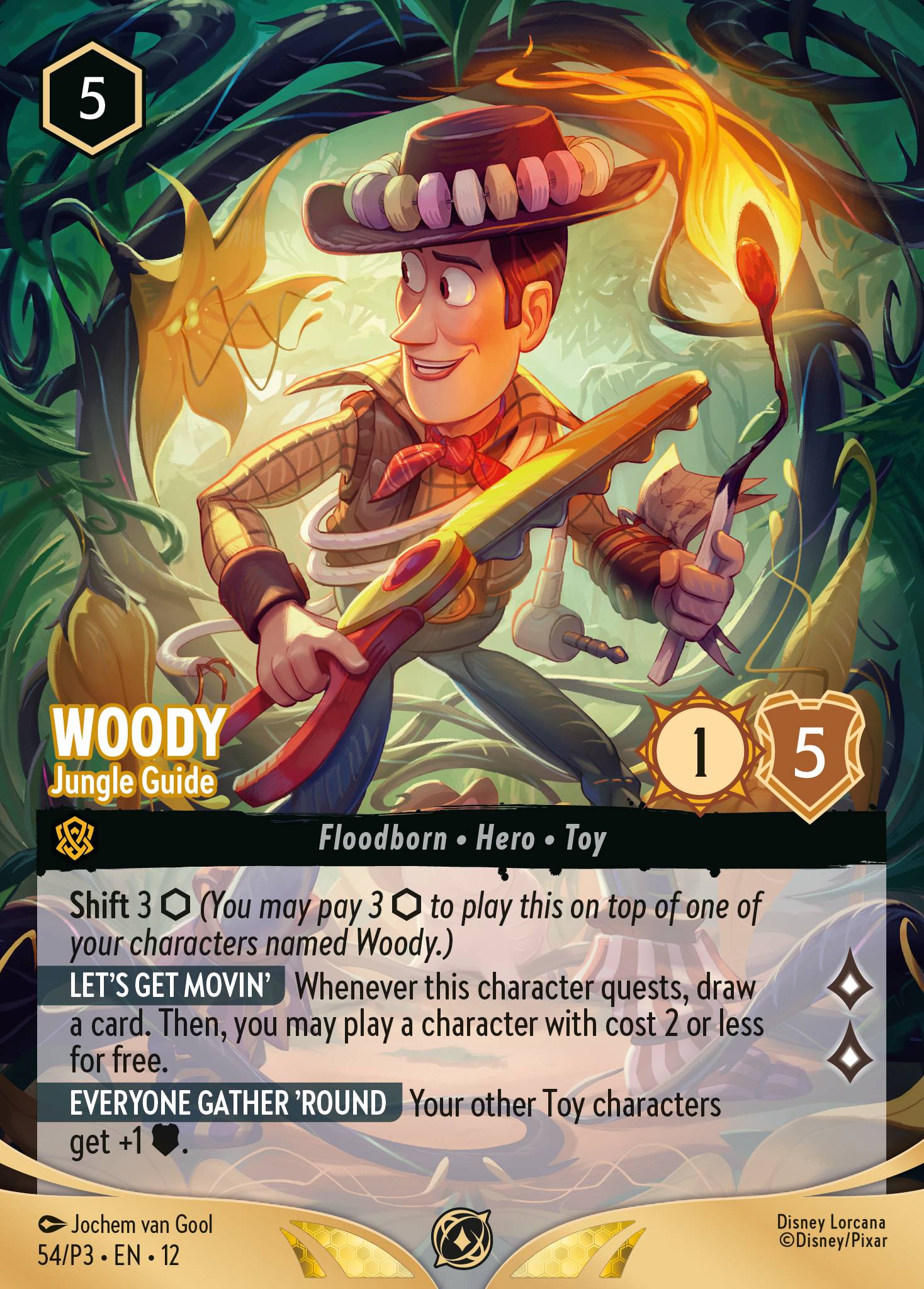
- Woody — Jungle Guide carried the Toy Story tribe, a genuinely fun build-around that never quite cracked the top tier but always threatened to.
None of this is a lock. The next few sets could reshape everything in ways nobody can see coming, and honestly, that’s the point. This is where Wilds Unknown stands as its season closes, and it was one of the fastest-moving, most fun metas the game has given us yet.